
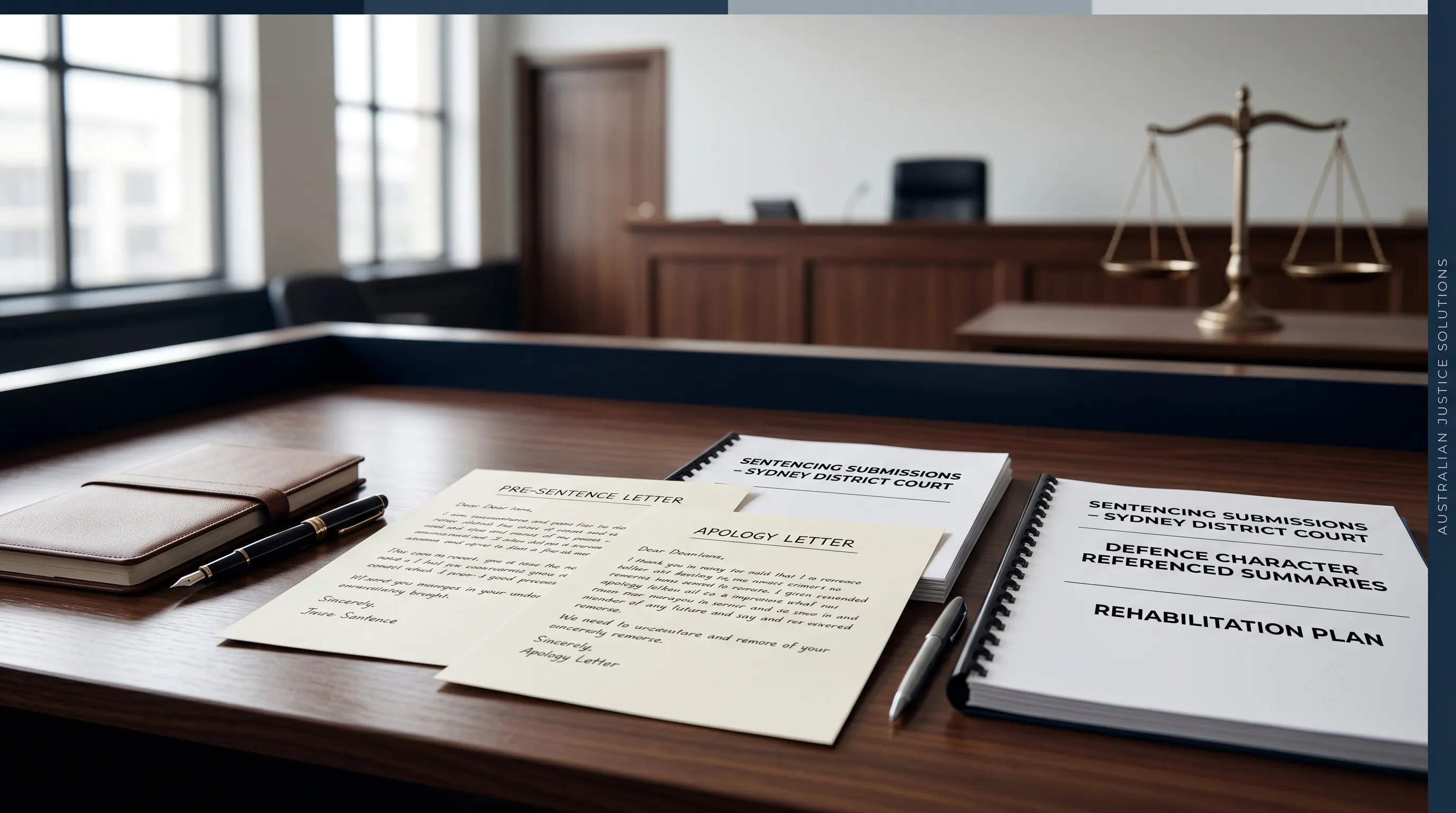
In criminal sentencing, a defendant’s remorse, willingness to make reparation, and personal reflection can be important factors that may help the court assess whether a more lenient sentence is appropriate.
However, many people facing sentences are unsure what remorse actually means in court. They may ask:
- Is an apology letter to the court useful, or will the judge see it as a performance?
- If I have pleaded guilty, do I still need to write a letter?
- What if there is no victim to compensate?
- Is an apology letter more useful than a character reference?
This article explains how courts consider remorse, reparation and reflective material in sentencing, and how defendants can present genuine remorse in a way that is clear, consistent and supported by evidence.
Remorse Can Be a Mitigating Factor in Sentencing
Under section 21A(3) of the Crimes (Sentencing Procedure) Act 1999 (NSW), remorse may be considered as a mitigating factor in sentencing. The legislation refers to whether “the offender has shown remorse for the offence,” including by taking steps to make reparation to the victim or the community.
In simple terms, remorse should be demonstrated through specific actions. It is usually not enough to simply say, “I am sorry” or “I regret what happened.”
Common ways to show remorse may include:
- preparing a personal pre-sentence letter;
- writing an apology letter;
- making repayment, compensation or other reparation;
- voluntarily attending counselling, rehabilitation or behaviour change programs;
- completing reflective courses or written reflection exercises;
- obtaining reports from psychologists, counsellors or case workers that show genuine attitude change.
The stronger the evidence, the more persuasive the remorse may be.
How Does a Judge Assess Whether Remorse Is Genuine?
A court will usually look beyond the existence of a letter. The judge will consider whether the remorse appears genuine, consistent and supported by conduct.
Relevant considerations may include the timing of the guilty plea, whether the defendant accepts responsibility, whether the defendant understands the harm caused to the victim or community, whether any practical steps have been taken to repair the harm, and whether the defendant has made real changes in their personal life.
For example, a person who pleads guilty early, accepts responsibility without excuses, repays some or all of the loss, attends counselling, and provides a sincere letter may be in a stronger position than someone who produces a generic apology shortly before sentencing.
Pre-Sentence Letter vs Apology Letter to the Court
A pre-sentence letter and an apology letter can both be useful, but they serve different purposes.
What Is a Pre-Sentence Letter?
A pre-sentence letter is usually addressed to the court. Its purpose is to help the judge understand the defendant’s background, the circumstances that led to the offending, the defendant’s reflection on the offence, and the steps taken to change.
A strong pre-sentence letter may include:
- a brief personal background, including family, education and work history;
- an explanation of the offending and what the defendant now understands about it;
- acknowledgement of the impact on the victim, family, community or justice system;
- the reasons for pleading guilty and accepting responsibility;
- practical steps already taken, such as repayment, counselling or rehabilitation;
- future plans to avoid reoffending and contribute positively to the community.
The letter should be specific and sincere. Courts are unlikely to give much weight to broad statements such as “I know I was wrong” or “I am sorry to everyone” if they are not supported by detail or action.
What Is an Apology Letter?
An apology letter is usually directed to the victim, but it may also be provided to the court or prosecution where direct contact with the victim is inappropriate or not permitted.
The focus of an apology letter should be on acknowledging harm and taking responsibility. It should not be used to justify the offending, minimise the victim’s experience, or shift blame.
A proper apology letter should avoid statements such as:
“I was misunderstood.”
“I did not mean it that way.”
“The victim also played a part.”
“I only did this because of pressure from others.”
Instead, the letter should acknowledge the wrongdoing, recognise the harm caused, express regret in plain language, and identify what the defendant has done or will do to prevent similar conduct in the future.
In some matters, an apology may be handled through a restorative justice process. This depends on the type of offence, the victim’s wishes, and whether the process is appropriate.
What Else Can Show Remorse Apart From Writing a Letter?
A letter alone is rarely the strongest evidence of remorse. Courts often give more weight to practical steps that show the defendant has accepted responsibility and made real changes.
For financial or property offences, this may include repayment, compensation, returning property, or agreeing to a payment plan.
For drink driving, domestic violence, drug-related or violence offences, it may include counselling, rehabilitation, drug and alcohol treatment, traffic offender programs, men’s behaviour change programs, or anger management courses.
For defendants with prior criminal history, it may help to show genuine lifestyle changes, such as stable employment, changed social circles, family support, new accommodation, or disengagement from harmful influences.
For offences involving emotional regulation, impulsivity or mental health concerns, a psychological report may assist the court in understanding the defendant’s progress and risk of reoffending.
These steps are often more persuasive when supported by independent evidence, such as completion certificates, psychologist reports, case worker letters, medical records or treatment summaries.
Will the Court Think the Apology Is Just for a Lighter Sentence?
This is a common concern. Courts understand that sentencing materials are prepared for a legal purpose. However, that does not mean they are useless.
The problem arises when the apology appears artificial, late, inconsistent or contradicted by other evidence.
An apology may carry less weight if the defendant changes their plea only shortly before trial, continues to deny responsibility, attacks the victim, gives an explanation inconsistent with the agreed facts, or provides character references that suggest the defendant is innocent.
For example, if a defendant’s apology letter says, “I accept full responsibility,” but a character reference says, “He told me he did nothing wrong,” the materials may damage rather than help the sentencing case.
For that reason, sentencing material should be prepared carefully and consistently. A lawyer can help ensure that the apology letter, pre-sentence letter, character references, psychological reports and submissions all support the same legal position.
How Does a Character Reference Support Remorse?
A character reference is different from an apology letter, but it can still support a remorse argument.
A useful character reference may explain that the writer knows about the offence, understands the seriousness of the matter, has observed the defendant express regret, and has seen positive changes since the offending.
The most persuasive references are usually specific. They do not simply say that the defendant is a “good person.” Instead, they explain what the writer knows, what has changed, and why the writer believes the defendant is capable of rehabilitation.
When a character reference is consistent with the defendant’s own pre-sentence letter, it can help present a more credible picture of remorse and rehabilitation.
Practical Tips for Writing an Apology Letter to the Court
When preparing an apology letter to the court, the defendant should focus on honesty, clarity and responsibility.
The letter should be written in the defendant’s own voice. It should not sound like a legal submission or a template copied from the internet.
The defendant should identify what they did wrong, acknowledge the effect of their conduct, explain what they have learned, and describe the concrete steps they have taken since the offence.
The letter should be respectful, direct and realistic. It should not exaggerate, overpromise or ask the court to excuse the conduct. A sincere letter accepts that punishment may follow, while asking the court to take genuine remorse and rehabilitation into account.
Conclusion: Remorse Is Not Just an Apology — It Is the Start of Taking Responsibility
The law does not expect every defendant to be perfect. However, it does expect a person to understand the harm caused, accept responsibility and take steps to change.
An apology letter to the court can help, but it should be part of a broader sentencing strategy. A sincere letter, genuine repayment, voluntary counselling, treatment participation and consistent character references can together show the court that the defendant is taking responsibility.
Remorse may not undo the offending. However, it can influence how the court assesses rehabilitation, risk of reoffending and the appropriate sentence.
Need Help Preparing an Apology Letter to the Court?
If you are preparing for sentencing and are unsure how to write an apology letter to the court, pre-sentence letter or character reference, legal guidance can make a significant difference.
The team at Jenny Xu Lawyers can assist with preparing sentencing materials, arranging supporting reports, reviewing apology letters, and presenting persuasive submissions to the court.
Disclaimer: The above content is for general informational purposes only and should not be regarded as legal advice. The information provided may change over time. You should always seek professional advice before taking any action.