

Ecstasy, also known as MDMA, is a synthetic drug commonly used for its stimulant and hallucinogenic effects. Popular in club and festival settings, ecstasy drugs are often linked to increased energy, heightened emotions, and altered perceptions. However, is ecstasy legal in Australia? The answer is no—under Australian law, possessing, manufacturing, supplying, or importing ecstasy carries serious legal consequences.
Understanding the Australian Law in drug, is ecstasy legal?
In New South Wales (NSW), ecstasy is classified as a prohibited drug under the Drug Misuse and Trafficking Act 1985 (NSW). This means any involvement with the drug, whether for personal use, sale, or distribution, is subject to criminal prosecution. Penalties vary depending on the quantity of illegal drugs found in a person’s possession and whether there is an intention to distribute them.
Ecstasy (MDMA) was banned in Australia in 1986 when it was classified as a prohibited drug under the Poisons Standard. Since then, Australian law has continued to enforce strict penalties for its possession, supply, and manufacture. Similar to other banned drugs in Australia, such as cocaine, heroin, methamphetamine (ice), LSD, GHB, and cannabis (in most states), ecstasy remains strictly regulated.
Many people wonder, “Is ecstasy legal for medical use?” While MDMA remains illegal, as of 1 July 2023, it has been reclassified as a Schedule 8 drug in certain medical settings, allowing its regulated use for mental health treatments under strict supervision.
What is Ecstasy and How Does It Affect the Body?
What is ecstasy? Ecstasy, or MDMA, is a synthetic drug that stimulates the nervous system while inducing hallucinogenic effects. It is commonly linked to party culture, music festivals, and clubs, where people take it for its euphoric effects.
After ingestion, ecstasy drugs can cause increased energy, emotional warmth, and sensory distortions. Effects typically appear within 30 to 45 minutes and last 3 to 6 hours. However, users may experience side effects such as nausea, sweating, muscle cramping, blurred vision, and teeth clenching.
Long-Term Effects and Risks:
Prolonged use has been linked to memory loss, depression, and anxiety due to damage to serotonin-producing neurons. Ecstasy also affects body temperature regulation, increasing the risk of hyperthermia, dehydration, and heart failure, especially in crowded environments.
People often compare MDMA with other substances like drugs, weed, or salvia drug, but each substance has different legal implications and effects.
What Class Drug is Ecstasy?
In Australia, ecstasy (MDMA) is classified as a Schedule 9 drug, meaning it is a prohibited substance under the Poisons Standard. This classification places ecstasy drugs in the same category as other illicit substances, such as heroin and LSD.
However, as of 1 July 2023, MDMA has been reclassified as a Schedule 8 drug in certain medical settings, allowing its use for mental health treatments under strict supervision.
Is It Illegal to Import or Export Ecstasy in Australia?
Yes, importing or exporting ecstasy (MDMA) in Australia is illegal under the Criminal Code Act 1995 (Cth). As a border-controlled drug, unauthorised importation or exportation carries severe penalties.
Penalties for Importing or Exporting Ecstasy
- Any quantity: Can lead to years of imprisonment.
- Marketable quantity (0.5g or more): Penalties increase significantly.
- Commercial quantity (500g or more): May result in life imprisonment.
Exceptions to the Law
Although ecstasy drugs are illegal, some licenced importation or exportation is permitted for:
- Medical and scientific research, under government-approved licences.
- Therapeutic use, as of 1 July 2023, where authorised prescribers may use MDMA for mental health treatments.
The unauthorised importation or exportation of ecstasy carries serious legal consequences, making it crucial to understand Australian law.
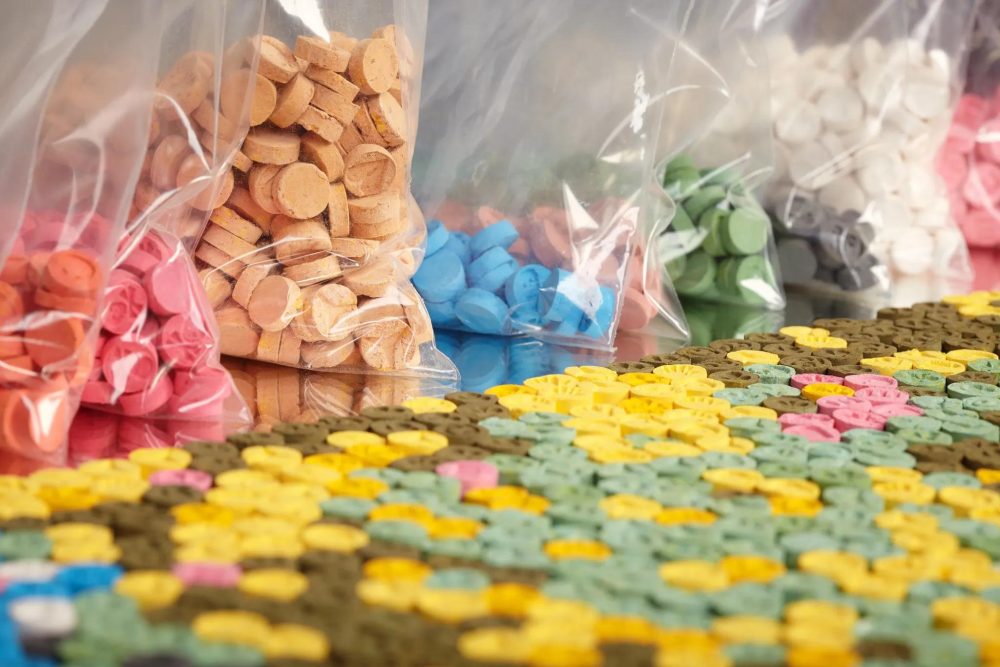
Manufacturing Ecstasy: Legal Consequences and Risks
The manufacturing of ecstasy (MDMA) is a serious criminal offence under Australian law, with strict penalties. It is illegal to produce, extract, package, or modify ecstasy drugs, whether for personal use, sale, or distribution. Even supplying materials or premises for drug production can result in prosecution under the Drug Misuse and Trafficking Act 1985 (NSW).
Penalties for Manufacturing Ecstasy
Punishments vary based on the quantity involved, ranging from years of imprisonment for small-scale production to life sentences for large-scale operations.
Supplying Ecstasy: What You Need to Know
The supply of ecstasy (MDMA) is a serious criminal offence in New South Wales (NSW) under the Drug Misuse and Trafficking Act 1985 (NSW). Selling, distributing, or even giving ecstasy drugs to someone for free can lead to severe legal penalties.
What Constitutes Supplying Ecstasy?
A person may be charged with supplying ecstasy if they:
- Sell or distribute it.
- Give it to someone, even without payment.
- Possess multiple tablets or packaging, indicating intent to supply.
- Facilitate a sale or assist in distribution.
- Offer to supply, even without having the drug.
Possession of Ecstasy: What Are the Penalties?
Possessing ecstasy (MDMA) in New South Wales (NSW) is a criminal offence, regardless of the amount. Under the Drug Misuse and Trafficking Act 1985 (NSW), being found with ecstasy drugs can lead to fines, criminal charges, and imprisonment.
What Counts as Possession?
A person may be charged if they:
- Have physical control over the drug (e.g., in their pocket, bag, or car).
- Knowingly possess ecstasy drugs.
- Have the drug for personal use rather than supply.
Possible Defences
- Lack of knowledge – Unaware of possessing the drug.
- No exclusive possession – Others had access to the location.
- Unlawful search – If police obtained the drugs illegally.
Can First-Time Offenders Avoid Conviction?
Some may qualify for:
- A Section 10 dismissal (no conviction recorded).
- A Conditional Release Order (CRO) for good behaviour.
- A Drug Diversion Program instead of prosecution.
While possession is a lesser offence than supply or manufacturing, NSW law enforces strict penalties to deter drug use.
Ecstasy and Driving: What Happens If You Get Caught?
Driving with ecstasy (MDMA) in your system is illegal in New South Wales (NSW), even if you do not appear impaired. Under the Road Transport Act 2013 (NSW), it is a criminal offence to operate a vehicle with any trace of illegal drugs in your system. Police conduct random roadside drug tests (RDTs) to identify drivers under the influence, and the penalties can be severe.
How is Ecstasy Detected?
- Saliva tests are used at roadside drug testing stations to detect ecstasy drugs.
- If a positive result is recorded, the driver must take a secondary test at a police station.
- Blood or urine tests may be conducted for further confirmation, particularly if impairment is suspected.
Penalties for Drug Driving
Punishments depend on the severity of the offence and whether it is a first-time or repeat violation:
- The presence of ecstasy in saliva or blood can lead to licence suspension, fines, and mandatory drug-driving education programs.
- Driving under the influence (DUI) , where impairment is evident, may result in imprisonment, higher fines, and longer licence disqualification periods.
Drivers caught repeatedly with drugs in their system or involved in accidents while drug-affected may face harsher penalties, including vehicle impoundment.
Possible Defences
A driver may be able to challenge a drug driving charge under certain circumstances, such as:
- Unintentional consumption (e.g., unknowingly ingesting spiked drinks or contaminated substances).
- Faulty or inaccurate drug testing methods lead to false-positive results.
- Delays in testing may affect the accuracy of drug detection and levels in the bloodstream.
As drug driving laws in NSW are strictly enforced, any trace of ecstasy in a driver’s system can result in serious legal consequences. Those facing charges should seek legal advice to understand their options and potential defences.
Facing an Ecstasy Charge in Court: What to Expect?
Being charged with an ecstasy-related offence in New South Wales (NSW) can lead to a court appearance, depending on the severity of the case. Courts take drug offences seriously, and the legal consequences vary based on factors such as the quantity of ecstasy drugs involved, prior convictions, and whether there was intent to supply.
Court Process for Ecstasy Charges
- First Court Appearance
- The accused attends the Local Court for a mention hearing.
- They can plead guilty (accept the charge) or not guilty (challenge the charge).
- If pleading guilty, the court will determine the appropriate sentence.
- If pleading not guilty, the matter proceeds to a hearing or trial.
- Hearing or Trial
- If contested, evidence is presented by both the prosecution and defence.
- Witnesses, police officers, or forensic experts may testify.
- If found guilty, sentencing will follow.
- Sentencing
- Sentences vary from fines and good behaviour bonds to imprisonment, depending on the severity of the offence.
- First-time offenders may receive a Section 10 dismissal (no conviction recorded) or a Conditional Release Order (CRO).
Possible Legal Defences Against Ecstasy Charges
- Unlawful search and seizure – If police conduct an illegal search, the evidence may be inadmissible.
- Lack of knowledge – The accused was unaware they possessed ecstasy drugs.
- No intent to supply – If the police misinterpret possession as intent to supply, the defence may challenge the claim.
What Happens If You Are Found Guilty?
A guilty verdict can result in:
- Criminal records can affect employment and travel.
- Jail time, depending on the offence (from 2 years to life imprisonment).
Understanding the Legal Risks of Ecstasy in NSW
Is ecstasy legal? No—ecstasy remains illegal in New South Wales (NSW), with strict laws governing its possession, supply, manufacture, importation, and use while driving. The penalties can be severe, even for first-time offenders, leading to criminal charges, fines, or imprisonment. Understanding the legal risks is crucial to making informed decisions and avoiding serious consequences.
If you are facing an ecstasy-related charge, having the right legal defence can make all the difference. Jenny Xu, an experienced criminal defence lawyer, provides expert legal guidance and strategic representation tailored to your case. With a deep understanding of NSW drug laws, she can help protect your rights and explore the best possible defence options. Don’t leave your future to chance—consult with Jenny Xu today and take the first step towards securing the strongest defence.
Disclaimer: The above content is provided for general informational purposes only and should not be considered legal advice. The information may change over time. You should always seek professional advice before taking any action.